

LOS ANGELES — Commercial beekeeping operates very differently from the small backyard apiaries many people associate with the practice. Large beekeeping operations often manage thousands of hives that travel across multiple states throughout the year, providing pollination services for crops such as almonds, apples, blueberries, and cranberries.
These migratory pollination operations involve complex logistics. Hives are transported by truck from region to region following seasonal bloom cycles, sometimes covering thousands of miles in a single year. Each location presents new environmental conditions, disease risks, and contractual obligations with growers who depend on bees for crop pollination.
Despite the scale and complexity of these operations, many commercial beekeepers still rely on paper records, spreadsheets, and manual tracking to manage their hives and pollination schedules.
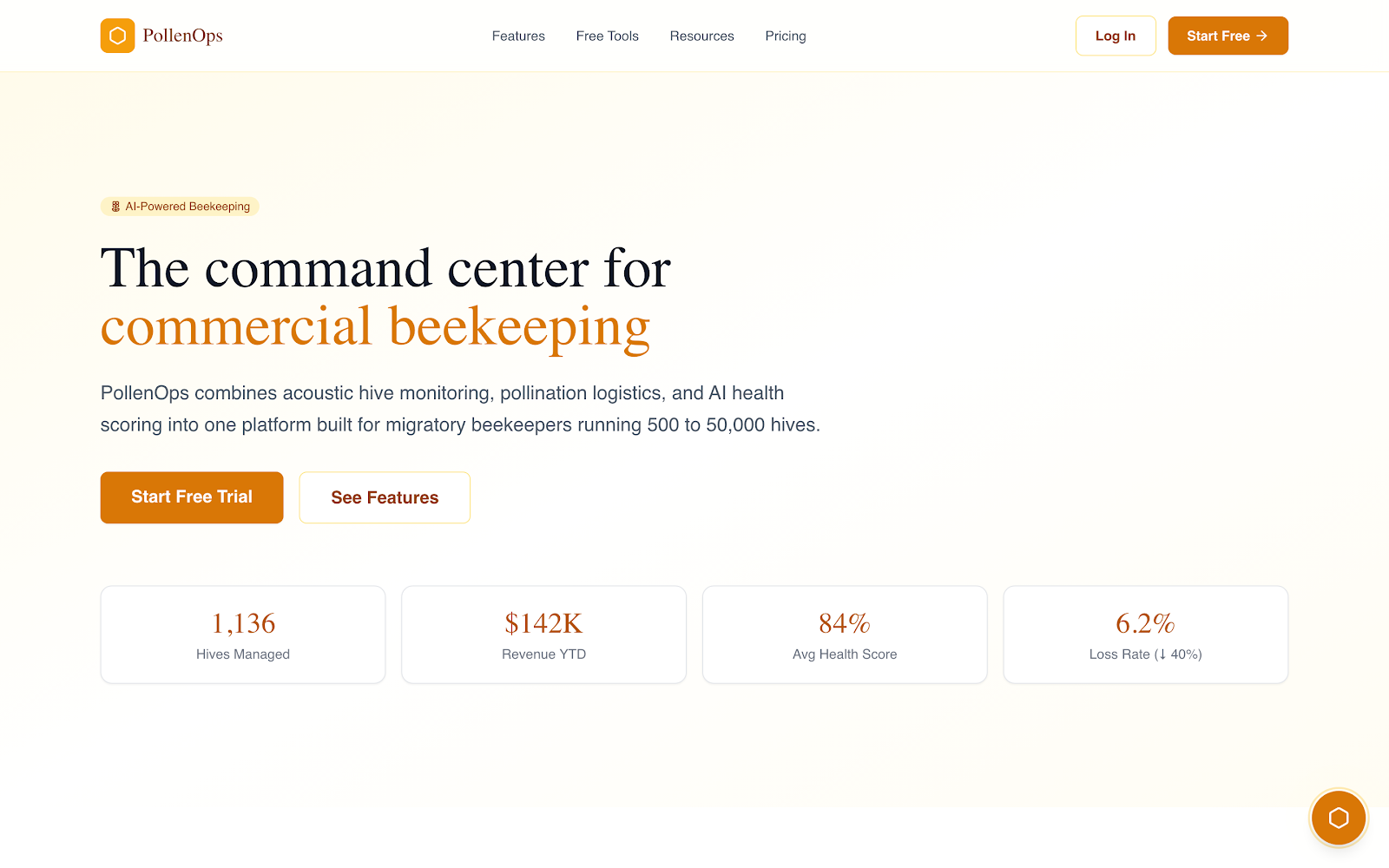
PollenOps, available at https://pollenops.com, is a software platform designed to help commercial beekeepers manage multi-state apiary operations, pollination logistics, hive health monitoring, and honey production planning from a centralized system.
The platform provides tools for tracking hives and apiary yards across multiple regions while coordinating pollination contracts, disease treatments, and seasonal hive movements. By consolidating operational data in one location, the system is designed to help large beekeeping operations manage thousands of colonies more efficiently.
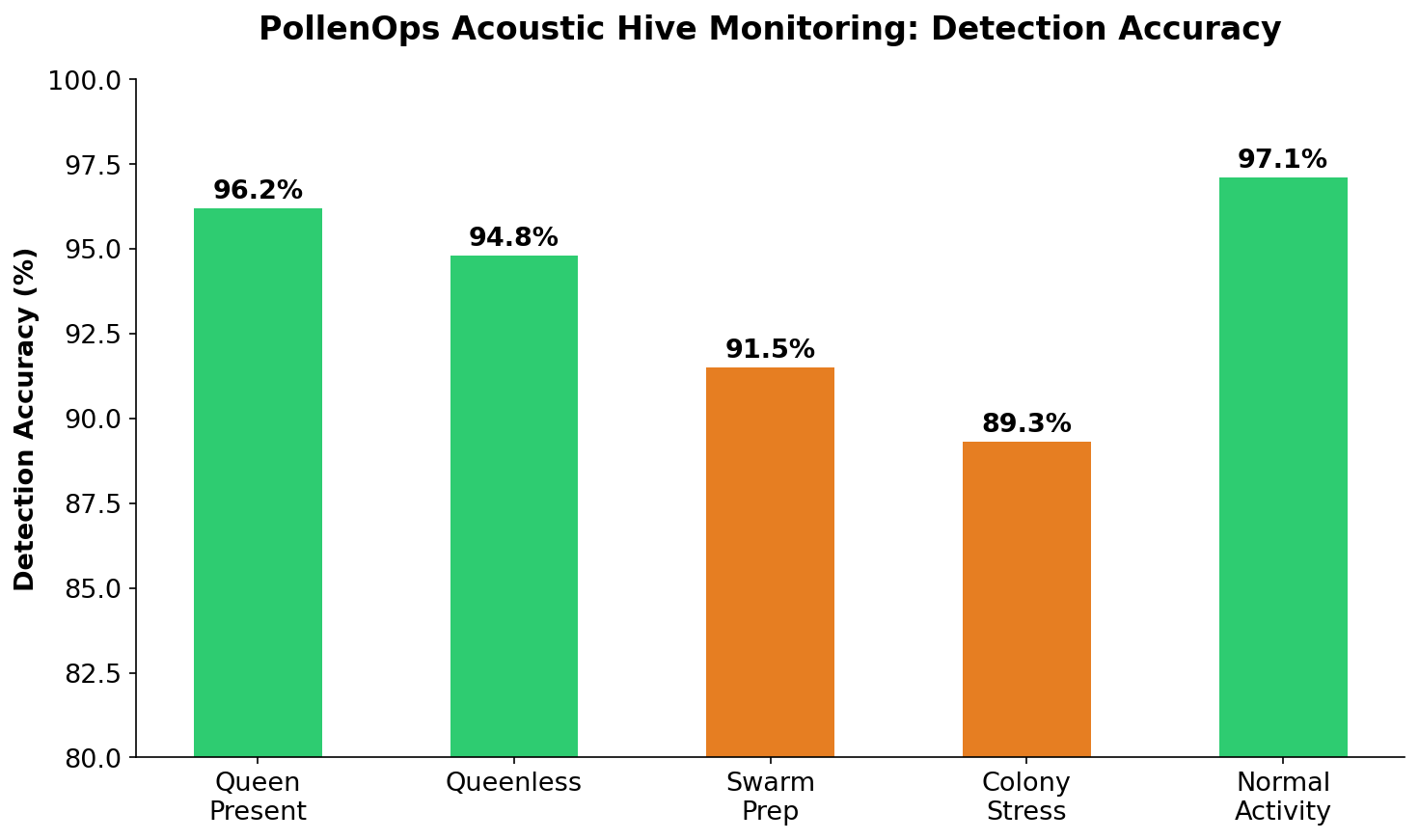
One of the platform’s most distinctive features is its acoustic hive monitoring system. Using machine learning models built with TensorFlow and trained on large datasets of hive audio recordings, the system analyzes the sounds produced by bee colonies to identify behavioral signals that may indicate changes in colony status.
Each hive produces a characteristic sound pattern that can shift depending on internal conditions. For example, the acoustic profile of a hive with an active queen differs from that of a queenless colony. Colonies preparing to swarm can also produce distinct sounds. By placing sensors near hive entrances, PollenOps allows the system to monitor these acoustic patterns and alert beekeepers when changes suggest potential issues inside the hive.
Traditional inspections require opening the hive, a process that can disturb bees and take significant time when managing large numbers of colonies. Acoustic monitoring provides an additional layer of observation without requiring physical inspection of every hive.
PollenOps also includes a grower marketplace that connects beekeepers with agricultural producers seeking pollination services. Crops such as almonds, blueberries, apples, and cranberries rely heavily on managed bee colonies during bloom periods. Historically, pollination agreements have often been arranged through brokers, cooperatives, or long-standing industry relationships.
The platform provides a digital environment where growers and beekeepers can connect directly, negotiate pollination terms, and manage contracts through the system.
Another component of the platform focuses on honey yield forecasting. The system analyzes hive data, weather conditions, nectar flow patterns, and bloom calendars to estimate honey production and harvest timing. For commercial honey producers, these forecasts can assist with operational planning, including equipment allocation, processing capacity, and sales agreements.
PollenOps also integrates Varroa mite and disease tracking, allowing treatment histories, mite counts, and colony health data to be managed alongside other operational information such as hive locations and pollination contracts. This consolidated approach helps beekeepers view hive health data within the broader context of their operations.
“Commercial beekeepers are managing a business that combines agriculture, logistics, and large-scale livestock management,” said founder Jake Thornton. “They are moving living colonies across thousands of miles each season while meeting pollination contracts and maintaining hive health. PollenOps was designed to give those operations a centralized system that reflects the complexity of what they do every day.”
The platform also includes a bee breeds database available at https://pollenops.com/breeds, which provides information on honey bee strains commonly used in commercial operations, including temperament characteristics, productivity traits, and disease resistance considerations.
Additional resources are available through the free tools section at https://pollenops.com/tools, including pollination rate calculators, hive strength estimators, honey yield forecasting tools, and migration route planners for migratory beekeepers.
PollenOps supports a wide range of commercial beekeeping organizations, including migratory pollination companies, large-scale honey producers, queen breeding operations, and multi-state apiary management businesses.
More information about the platform is available at https://pollenops.com.
About PollenOps
PollenOps is a software platform designed to help commercial beekeeping operations manage hive locations, pollination logistics, colony health monitoring, and honey production forecasting. The system integrates operational planning tools with acoustic hive monitoring and data analytics to support large-scale apiary management. Learn more at https://pollenops.com.